18 May 2025
I have been somewhat distracted this past week – it has been exceptionally hot, July weather in May and we have been having our >20 year old garden fence replaced. At the same time this heat and my undoubted horticultural skills have caused seedlings of tomatoes, peppers, aubergines to shoot to the sky. I have never seen anything like it. Typically about now I would be gradually “hardening off my seedlings” ready to plant out but there is not much to harden them against when daytime temperatures are about 28C … hotter than inside the greenhouse should be in a normal year.
The fence I mention above was initially installed to keep unleashed dogs out, but over the years it has helped to make our garden nature reserve a success. I know the North American dream is supposed to be unfenced gardens with neighbours living in sight of neighbors and waving to each other across mown lawns, but that doesn’t work for me. A fence gives privacy and corrals the native plants and creatures who visit and live well here. On the other hand it provides a predator-free environment for our too many chipmunks. We have at least three separate family groups. Certainly they are cute, no denying that, but they are also destructive beasts. A bit of predation by our Hawks would not be unwelcome.
All of which is to say that for the first time since Whilst Out Walking was first unleashed I don’t have much of a theme to for this Sunday. Time has caught up with me. I will work in our garden today and wish you well working in yours.
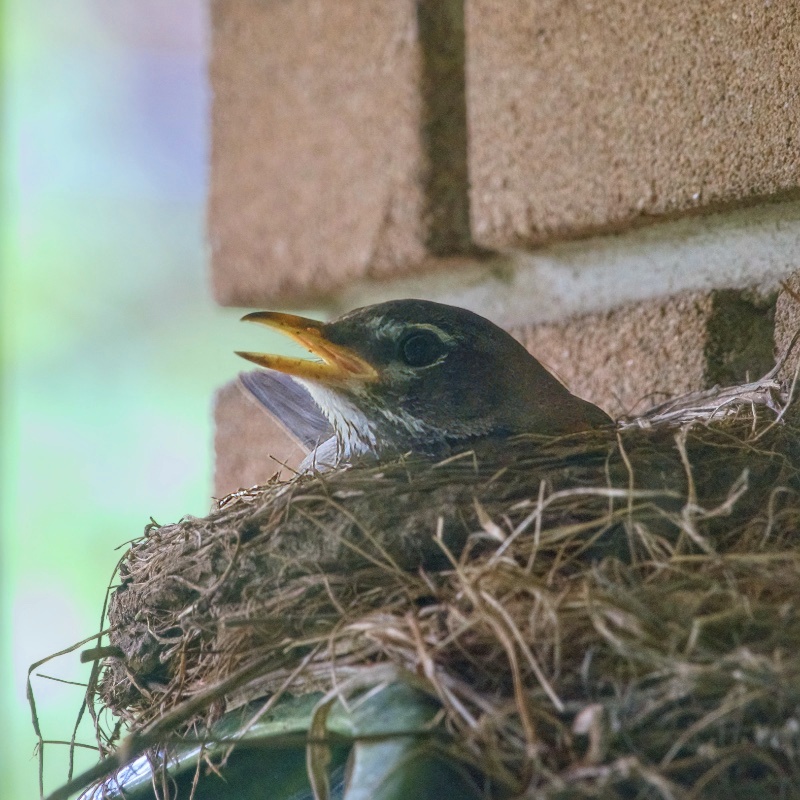
Meanwhile – here is Mrs Robin. She completed her nest right beside our front door a few days ago and now has at least one blue egg to work with. Her beak is open because of the excessive heat. We are having to come and go via the garage and trying to intercept the mail man and other callers before they get to within a few feet of her nest … she has has very varied and low collection of expletives and deploys them at full volume. I read around nesting Robins and found that 75% of fledged youngsters each season do not survive past November and that attrition rate together with a potential life expectancy of the survivors means that there is a complete population turnover every six years,
Tiny Wonders
The author of this book review must be the same age as me and we share a common experience. The book he writes about is probably one that would not get a market these days, which is rather sad. He quotes the dedication from the book: “To Sheila and Donn, two small children who wanted to SEE THE INSIDES OF THINGS. It is hoped that the little book may be useful and interesting to youthful inquirers of all ages.”
 Wildlifing with Richard Gregson
Leave a comment